Do the outside vent test
Run the dryer on a heat cycle and go outside to the vent hood. You should feel a strong, warm blast of air. A weak trickle means the run is clogging, even if your lint trap is spotless; the trap only catches the first share of lint. In older Hartsville and farm homes, vent runs can stretch 20 feet with bends, and every bend is a lint shelf.
Why it gets worse fast
A restricted vent makes the dryer run longer, which pushes more lint into the restriction per load, which restricts it further. It's also a genuine fire risk: lint near a heating element is the combination dryer fires are made of. If the top of your dryer gets unusually hot or you smell scorching, stop using it until it's checked.
Vent, element, or fuse: how we sort it out
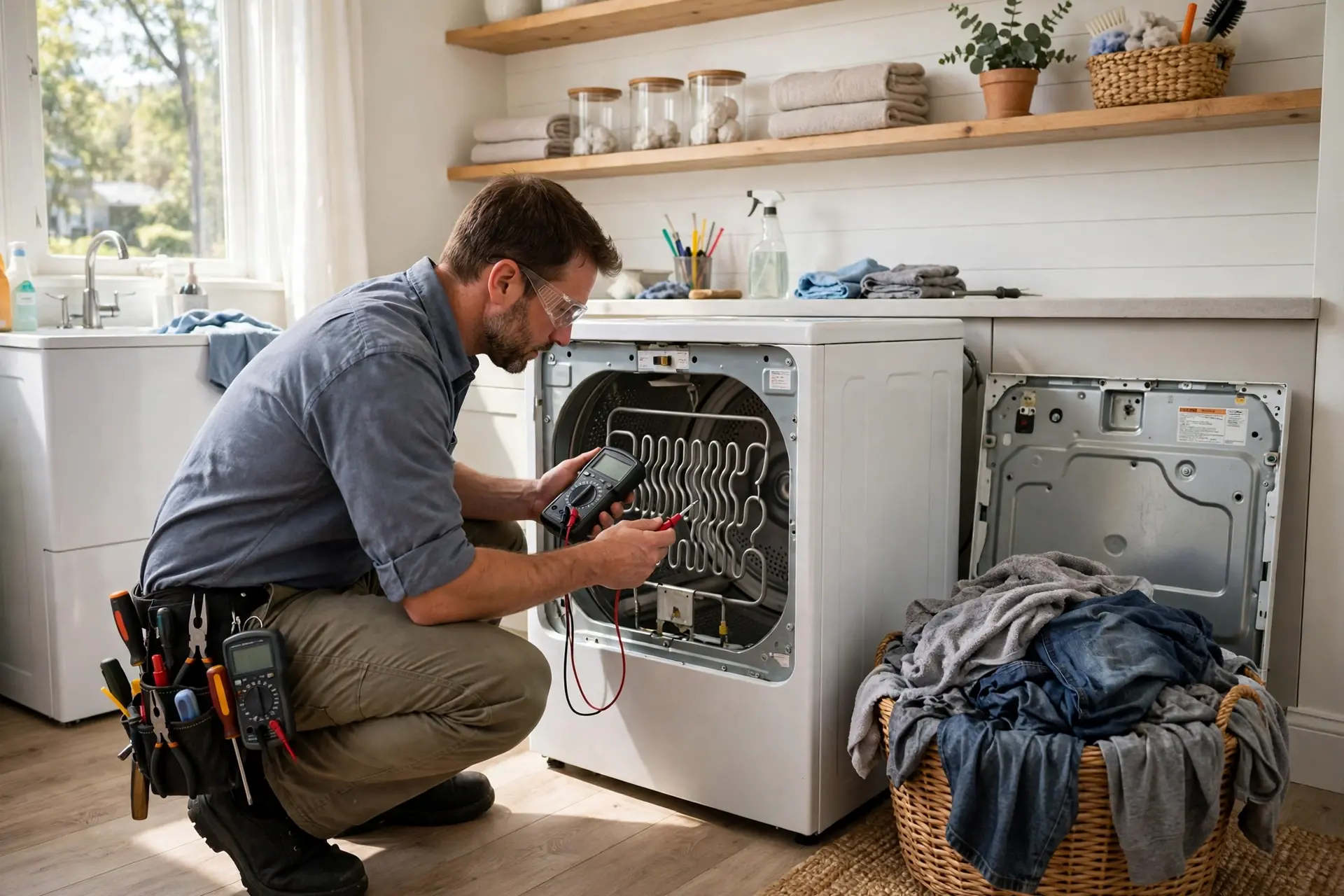
On a visit we measure airflow first. If airflow is poor, we clean the run and test again; many dryers 'come back to life' at that point. If airflow is good but there's no heat, we test the element, igniter, and fuses electrically. Either way you get a diagnosis with a meter reading, not a guess.
How Long Is Too Long for a Vent Run?
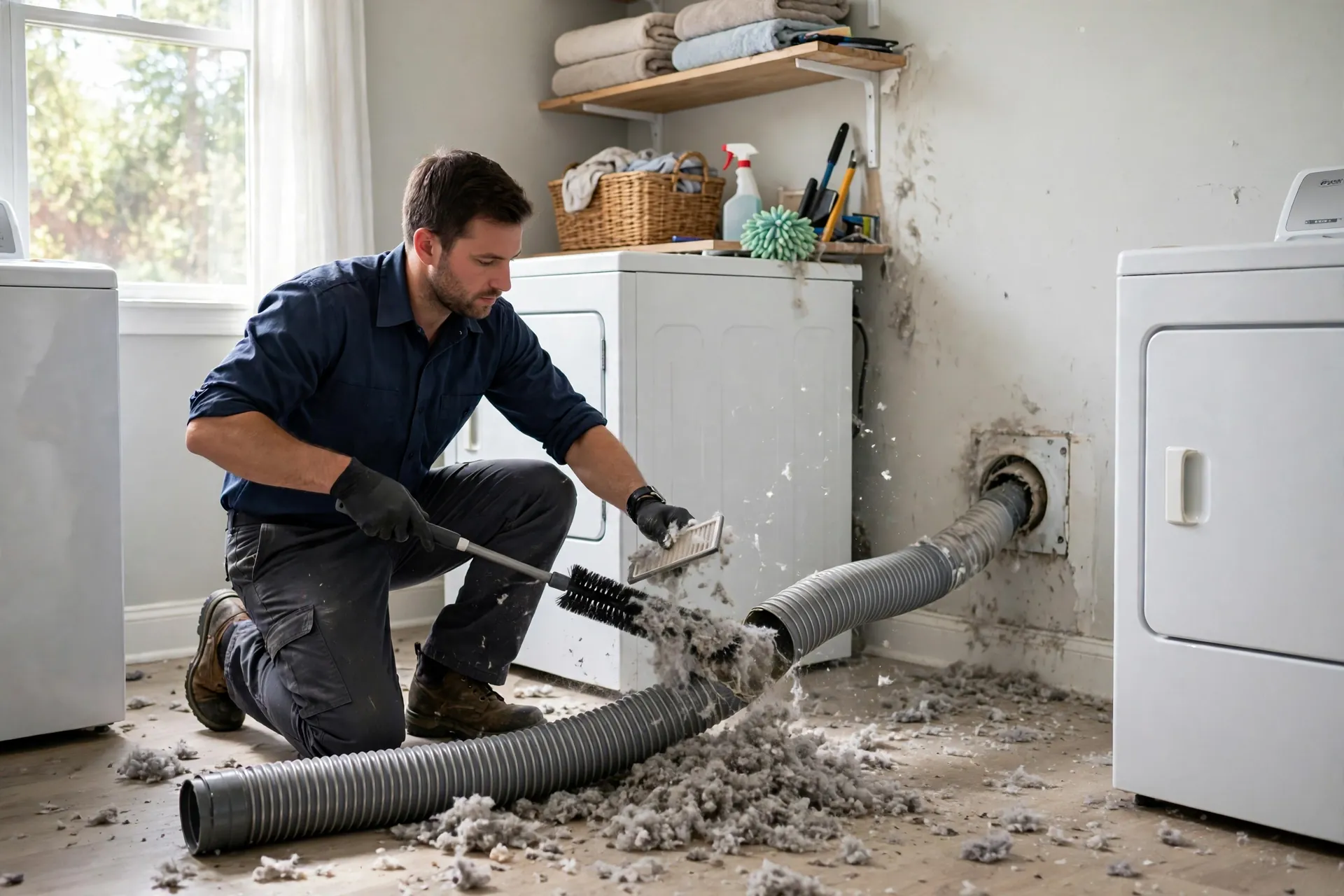
There is no single safe length for a dryer vent run, because every bend adds resistance, and a run with three bends behaves like a much longer straight run. In older Hartsville and farm homes, runs can stretch twenty feet with bends, and every bend is a shelf where lint collects. The outside hood test tells the story in seconds: a strong, warm blast means the run is clear, and a weak trickle means it is clogged, even if the lint trap is spotless. If your dryer takes two cycles, check the hood before you blame the dryer.
Related Services
Related Reading
Questions & Answers
Does this problem fix itself?
Almost never. Appliance faults like these either stay the same or get worse with use, and the secondary damage (spoiled food, water damage, overheated parts) is what gets expensive. Catching it early is the cheap option.
Can I safely check anything myself?
Yes: the checks described in this article are the safe ones (settings, vents, filters, temperatures with a thermometer). Anything involving gas lines, sealed refrigerant, or microwave high-voltage parts is a technician job.
How much will the repair cost?
It depends on which cause your appliance has, which is what the diagnosis is for. Our cost guide publishes typical ranges for each service, and your exact price is quoted upfront before work starts.
How fast can you come out?
Same-day or next-day in the Hartsville area during business hours when you call early, and 24/7 for emergencies like leaks and warming fridges. Call (615) 583-1836.
Can I clean the vent myself?
You can clean the lint trap and the short hose behind the dryer, and you should. A full vent run, especially a long one with bends, needs a proper brush and vacuum, and a run that goes through walls or an attic is a job for a tech. If the outside hood still blows weakly after you clean what you can reach, call us.
Why does my dryer still take two cycles after I cleaned the lint trap?
Because the trap only catches the first share of lint. The rest collects further down the run, at every bend, and in the outside hood. A clean trap with a clogged run is the most common dryer complaint we see, and the fix is cleaning the whole run, not just the trap.