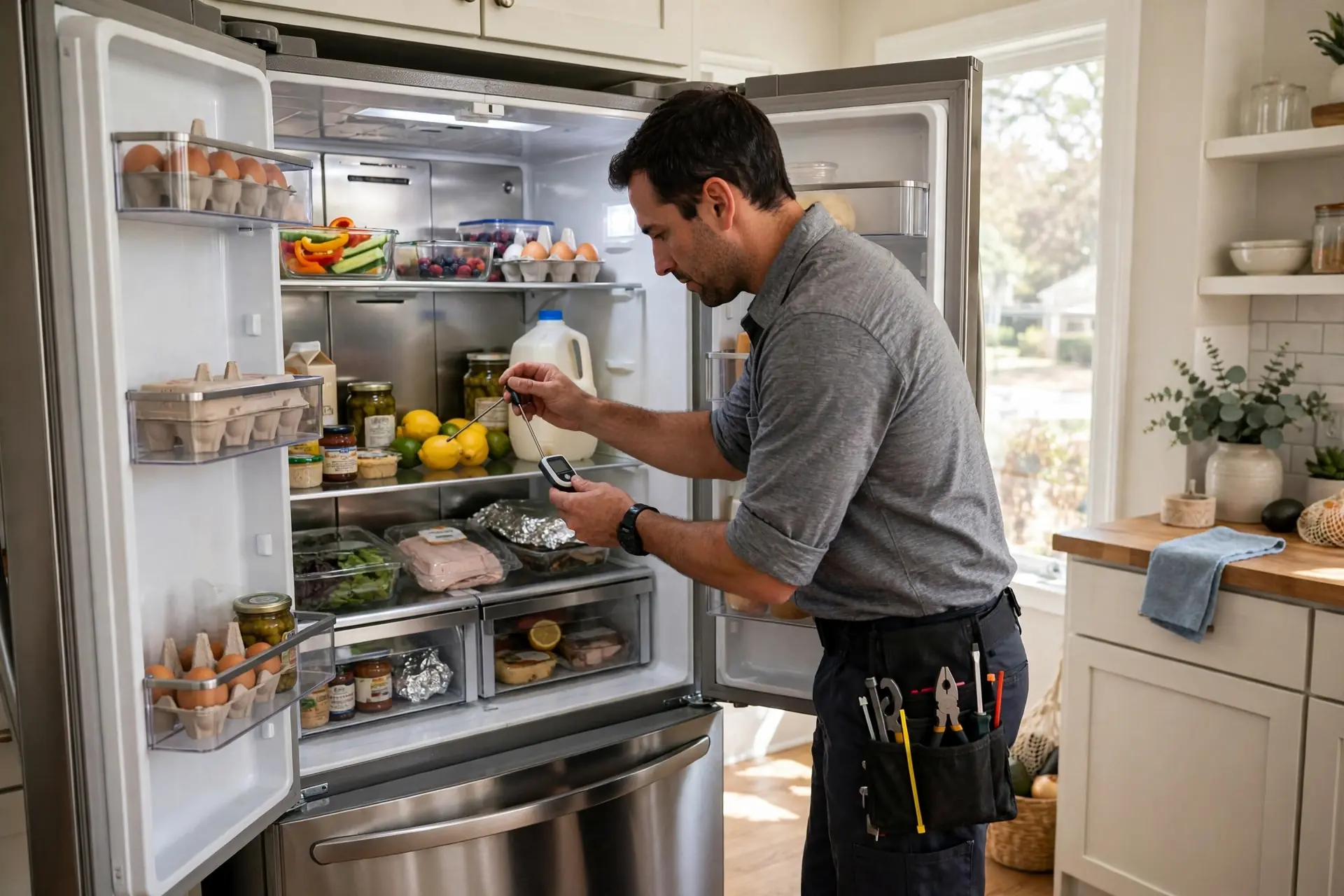
The two-minute check you can do first
Feel for air at the vent inside the fridge, usually on the back wall or top corner. No airflow with the freezer running points to the fan or a blocked vent. Also check that food boxes aren't packed tight against that vent; a stuffed fridge genuinely can't circulate. And confirm the fridge is set to 37–40°F, not bumped warmer by a jar.
The frost connection
If the freezer back wall is white with frost, the defrost system has likely failed, and the evaporator behind that wall is iced solid. Air can't pass through a block of ice, so the fridge starves first while the freezer still feels cold. This is repairable (heater, thermostat, or timer/control) and it's the version of this problem we fix most often in Trousdale County.
When it's not the fan
Less commonly, the damper that meters air into the fridge sticks shut, or the fridge's own temperature sensor lies to the control. Both need a tech's meter, not parts-swapping. If your fridge is warm AND the freezer is warming too, that's a different and more urgent problem (compressor or refrigerant). Call the same day; food safety clocks start ticking above 40°F.
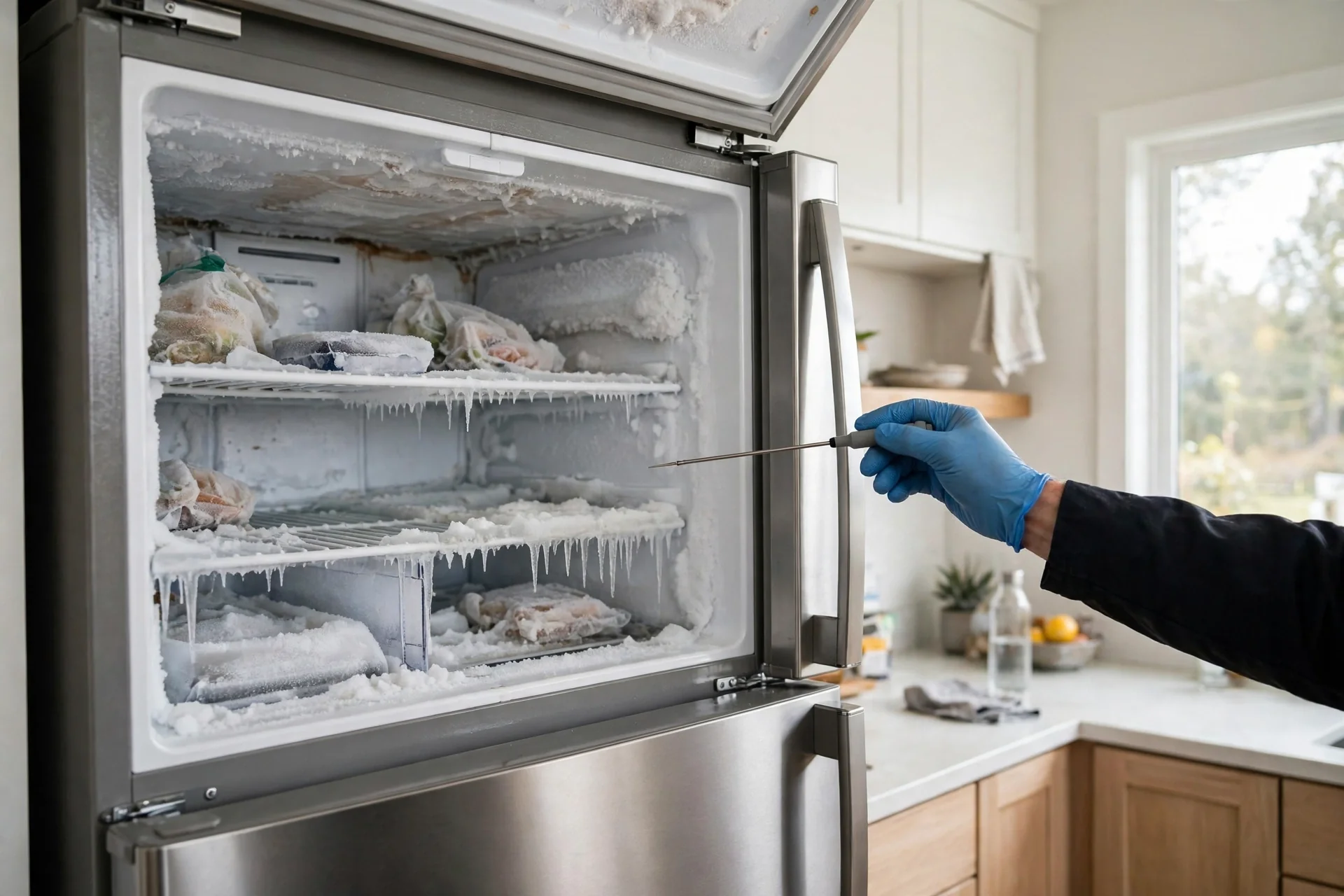
What the Tech Tests First on a Warm-Fridge Call
On a warm-fridge call the checks run in the same order every time: the setting, the airflow at the vent inside the fridge, the frost on the freezer back wall, and the door seals. The fan gets listened to, the defrost system gets tested, and the damper that meters air into the fridge gets checked. Most warm-fridge problems are found in the first three checks, and the expensive causes, a failed compressor or a refrigerant leak, get tested with a meter rather than guessed at, because the fix and the price are very different depending on which one it is.
Related Services
Related Reading
Questions & Answers
Does this problem fix itself?
Almost never. Appliance faults like these either stay the same or get worse with use, and the secondary damage (spoiled food, water damage, overheated parts) is what gets expensive. Catching it early is the cheap option.
Can I safely check anything myself?
Yes: the checks described in this article are the safe ones (settings, vents, filters, temperatures with a thermometer). Anything involving gas lines, sealed refrigerant, or microwave high-voltage parts is a technician job.
How much will the repair cost?
It depends on which cause your appliance has, which is what the diagnosis is for. Our cost guide publishes typical ranges for each service, and your exact price is quoted upfront before work starts.
How fast can you come out?
Same-day or next-day in the Hartsville area during business hours when you call early, and 24/7 for emergencies like leaks and warming fridges. Call (615) 583-1836.
Should I unplug a warm fridge while I wait for a repair?
Leave it running unless the tech tells you otherwise. A running fridge is still cooling, even if it is struggling, and unplugging it lets the food warm faster. Keep the doors shut, move perishables to a cooler with ice if the fridge is already above 40 degrees, and clear a path for the tech.
How long can food stay safe in a warming fridge?
Not long once the fridge climbs above 40 degrees, which is why a warming fridge is an urgent call, not a tomorrow call. Milk, meat and other perishables should go to a cooler with ice while you wait. When in doubt about a food item, the safe choice is to throw it out.